Table Of Content

His Guadalajara work includes over a dozen private homes in the Colonia Americana area of what is today near downtown Guadalajara. These homes, within walking distance of each other, include Barragán's earliest residential projects. One of his first buildings, Casa Cristo, was restored and houses the state's Architects' Guild.
In Residence: Inside Casa Gilardi, Luis Barragán's Final House Design
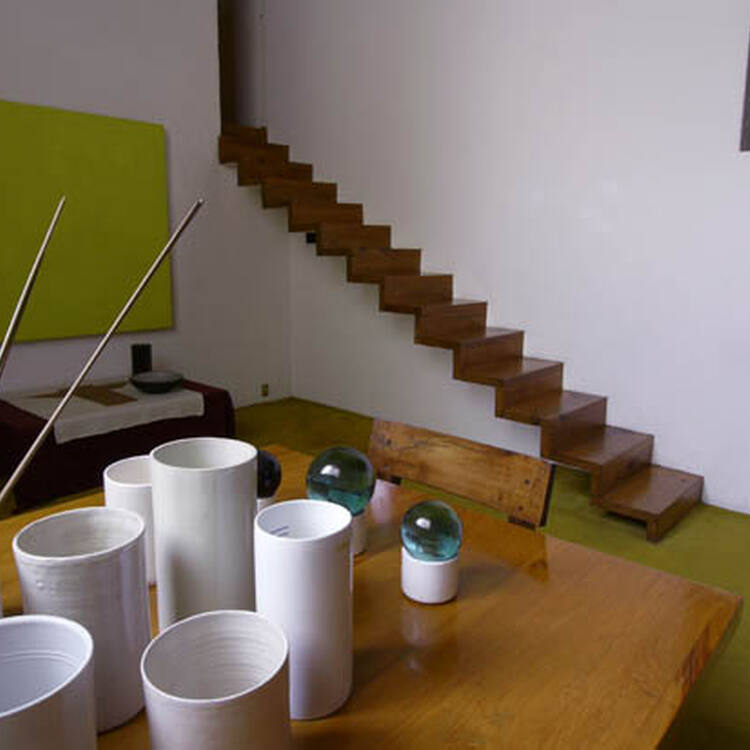
This project reflects the importance of the native culture and its intersection with an elegant modern design. As in all of Barragán's architecture, all spaces offer a multitude of sensations, through games of light, color, distribution, and architectural elements, such as the staircase without a railing that seems to levitate under a zenithal light. A yellow light that passes through small vertical openings floods the corridor that leads to a minimalist space with a water mirror next to the dining room, where a red-painted wall supports the skylight. Luis Barragán Morfin was born in 1902 into a wealthy family in Guadalajara, where he studied engineering. He began his career in the conservative city of his birth, where much of the architecture was still primarily utilitarian, or in the colonial Andalusian and French fin-de-siècle styles.

Luis Barragán
The documents were offered to a number of prospective clients, among them the Vitra Design Museum,[9] which in 1994 was planning an exhibition dedicated to Luis Barragán. Following the Vitra[10] company's policy of collecting objects and archives of design and architecture, the archives were finally acquired in their entirety and transferred to the Barragán Foundation in Switzerland. Barragán worked for years with little acknowledgement or praise until 1975 when he was honored with a retrospective at the Museum of Modern Art in New York City.
Luis Barragán House and Studio
Other influences included Europeans who emigrated to Mexico in the postwar years, including architect Max Cetto and sculptor Matthias Goeritz, who, with Barragán, designed the famous Torres de Satélite sculpture in Mexico City. The austere geometric volumes of the villa find a counterpoint in the organic shapes, textures and hues of the surrounding garden, a space to which Barragán devoted much care. As in his concurrent work on the land across the street from the Prieto López House, destined to become a showcase garden, the architect altered the natural site with subtle, measured interventions. Intentional efforts were made to respect and preserve original elements such as plants and rocks, while at the same time exploiting the different levels to create diverse settings and spatial experiences.
VISIT CASA LUIS BARRAGÁN
From the outside, Casa Luis Barragán appears to be a nondescript two-story building, all straight lines with a handful of small windows. A sign in a first-floor window reads “By appointment only,” and the only hint that something interesting might be inside is a silver mirrored orb visible in the second-floor window. The Casa was the home and studio of one of the most famous Mexican architects of the twentieth century, Luis Barragán (1902–1988). The building, in what is now the Miguel Hidalgo district of Mexico City, has long been a mecca for architects and design aficionados from around the world. Barragán decided to raise the perimeter walls of the house, in order to achieve the introspection of the user.
Sketches, Perspectives, Notes, and Drawings by Luis Barragán that Reveal Processes in His Work - ArchDaily
Sketches, Perspectives, Notes, and Drawings by Luis Barragán that Reveal Processes in His Work.
Posted: Tue, 09 May 2023 07:00:00 GMT [source]
The garden is then as an escape from the top prospect in a place, probably the most intimate of the house, where you have to protect the eyes from walls.In the kitchen, spacious and well lit, the garden appears only when you open the door. Translucent glass show window of a hierarchy here is very different from those described above. Early photographs by Armando Salas Portugal capture the abstract, almost monastic arrangement of the interiors as originally conceived by Barragán, and also convey his unique synthesis of a Modernist aesthetic with attributes of the Mexican colonial heritage. In these images, the entry hall and living room are sparsely furnished with monochrome woven rugs, a few unvarnished wood and leather chairs, low and high tables and sideboards of simple design. Over time, additional furniture and a collection of Mexican artworks and artisanal objects found their way into the domestic space, progressively softening and personalizing the rigorous restraint that characterized the architect’s initial concept.
The three bedrooms, one for guests and two on the second level, have a minimalist character and similar furniture and textures. Like the rest of the house, these spaces are flooded with natural light through a play of reflections and colors. Returning to the different spaces of the house, we come across the double-height library, which is subdivided into small areas by half-height white walls. The sequence of low walls will now accompany the spiral journey to a plank staircase, which becomes a characteristic element of this house. To reach the different spaces, Barragán uses various resources to give modern spatial fluidity to the architecture of his house, such as the use of shadows, colors, contraction and expansion, etc. Barragán attempted to give the design a personal touch by dividing its layout into highly diverse spaces, but with a logic that integrates each of its parts, and by integrating traditional Mexican architecture with modern international architecture.
Design Inspiration
Three walled courtyards are articulated by masonry partitions, one of which is pierced by an elliptical arch. Both the partition and perimeter walls have a rough stucco finish that contrasts with the glazed tiles used for the coping. Barragán is commissioned by Mario Pani and the Banco Internacional Inmobiliario real estate company to create a landmark for the southern entrance to Ciudad Satélite, a new residential development in Naucalpan de Juárez, north of Mexico City. Barragán invites Mathias Goeritz to collaborate on the project, resulting in the jointly designed Torres de Satélite. Barragán decides to give up working by commission and devotes himself to the development of independent architectural and urban projects and the design of gardens. Widely believed to be the first licensed female African American architect in the United States, Beverly Lorraine Green's many contributions to architectural history have often been overlooked.

In 1945 he started planning the residential development of Jardines del Pedregal, Mexico City. In 1947 he built his own house and studio in Tacubaya and in 1955 he rebuilt the Convento de las Capuchinas Sacramentarias in Tlalpan, Mexico City, and the plan for Jardines del Bosque in Guadalajara. In 1957 he planned Torres de Satélite (an urban sculpture created in collaboration with sculptor Mathias Goeritz) and an exclusive residential area, Las Arboledas, a few kilometers away from Ciudad Satélite. In 1964 he designed, alongside architect Juan Sordo Madaleno, the Lomas Verdes residential area, also near the Satélite area, in the municipality of Naucalpan, Estado de México. In 1967 he created one of his best-known works, the San Cristóbal Estates equestrian development in Mexico City. In 1931, Barragán, a then unknown architect from Guadalajara, traveled for the second time to Europe, where he visited several recent projects by Le Corbusier, including the Villa Savoye in Poissy, France.
As we move past the screen, the space opens up into an airy living room, with a two-story tall ceiling, furniture designed by Barragán and designer Clara Porset, artwork by Josef Albers and Amedeo Modigliani, and a window that takes up almost the entire west wall. The strong sense of the limit set is facing toward the street for the first settled area of the house. The access you have a small light yellow stained glass by a reinterpretation of a traditional space. That caused the pause that precedes the Mediterranean or Mexican home to monasteries or convents.The goal serves as an overflow area and at the same time, as a place where the senses are prepared.
In its current state, the house has undergone a number of interventions that have slightly altered its spatial configuration and interior details, while changes in the surrounding urban environment have affected the original setting and outdoor areas. With Barragán’s involvement, equestrian competitions and other promotional activities are organized at Las Arboledas, a residential development designed by Barragán, and at the nearby Club Hípico Francés, both located north of Mexico City in Atizapán de Zaragoza. The Barragán House, complemented by the studio at number 12 on the same street, will serve as the architect’s residence for the rest of his life. A Chicago native, John Moutoussamy studied at the Illinois Institute of Technology, where Mies van der Rohe was one of his professors.
A photograph of the iconic cantilever stairs in the Barragán House appears in Bernard Rudofsky’s Stairs exhibition, presented at Harvard University’s Department of Architecture in Cambridge, Massachusetts. For the related business and real estate operations, Barragán and the entrepreneur José Alberto Bustamante establish the company Jardines del Pedregal de San Ángel, SA. There he meets the architect Frederick Kiesler, the artist José Clemente Orozco, who is currently working on murals for the New School for Social Research, and Alfred Lawrence Kocher, managing editor of the Architectural Record. Barragán begins working for several building contractors, including his brother Juan José Barragán, in Guadalajara.
Moutoussamy adopted many of van der Rohe's principles of simplicity, several of which are evident in his most famous building, the Johnson Publishing Company, which housed the offices of magazines like Jet and Ebony. To this day it is the only skyscraper in downtown Chicago designed by a Black architect. The small pink house, which closes towards the street, reinforcing its interiority, is ordered on the longitudinal axis of the plot.
These are placed on a state waiting for the direct action of a palette of materials needed, low variants, but generous with wood, and stone walls. The bedroom wing is positioned perpendicular to the main block, flanking the swimming pool terrace on the north side. On the upper level, a corridor turns at a right angle to access the master suite and a second bedroom with an adjacent wardrobe and bathroom. Two further en-suite rooms are located on the lower level of the wing, reached via the open staircase at the east end of the entrance hall and a corridor corresponding to the one above.
He would go on to assist Costa on the headquarters for the Ministry of Education and Health, a project on which Le Corbusier served as a consultant. The subsequent glass-and-concrete skyscraper would serve as a touchpoint for modern urban architecture going forward. From there, Niemeyer went on to assist Costa on the Brazilian pavilion at the 1939 World's Fair, before completing many iconic monuments with various collaborators. But Niemeyer's masterpiece was his urban plan for the city of Brasilia, a socialist utopia created in collaboration with Costa.
Barragan had a fascination with animals, particularly horses, so many relics of popular culture and symbols are found throughout the house. Crosses can also be found in multiple rooms, which, coupled with the bold colors used by Barragan, create a mythical and spiritual architecture. He found many of his furnishings at craft markets and antique shops, all true to the cultural identity of Mexico. This cultural flare is also apparent in the bold pink, yellow and lilac colors chosen by the architect.